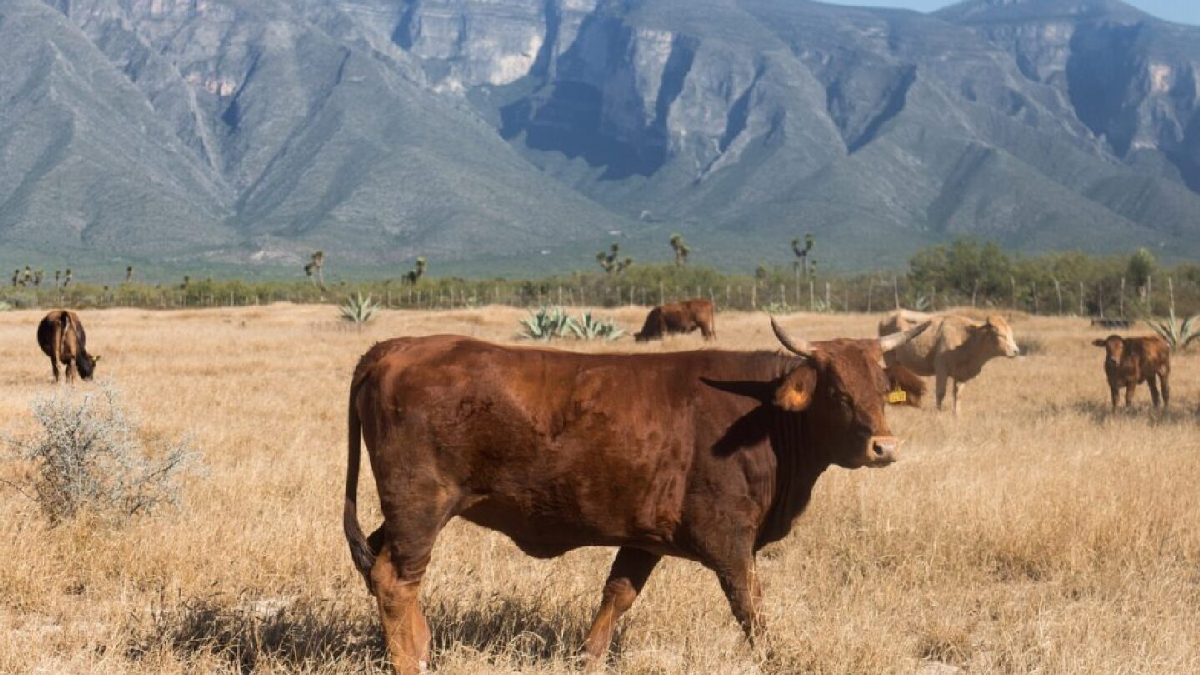
Agua Prieta has resumed cattle breeding with an initial goal of 900 head per day. Mexico projects exporting 200,000 calves during 2026.
Sonora has resumed exporting live cattle to the United States through the Agua Prieta quarantine station, after resolving a technical issue that had forced the suspension of operations shortly after its reopening in late August. The crossing began with a target of approximately 900 head per day, a significant recovery for ranchers in northern Mexico, who are trying to rebuild one of their main trade channels while vigilance against the cattle screwworm (GBW) remains in place.
The interruption was not directly linked to a new health problem, but rather to the infrastructure used to move the animals. Juan Carlos Ochoa Valenzuela, president of the Sonora Regional Livestock Union (UGRS), reported that operations were able to resume after completing adaptation work and installing a hydraulic chute , equipment used to guide and handle cattle during inspection procedures.
During the first few days, priority will be given to animals whose export was delayed due to the temporary closure. The plan is to move around 900 head of cattle per day, although this number may be adjusted depending on inspection capacity and the operation of border crossings. For producers, restoring continuity is crucial after months in which sanitary restrictions disrupted the traditional flow to the U.S. market.
The reopening of Agua Prieta comes in a particularly challenging year for Mexican livestock trade. Homero García de la Llata, president of the National Confederation of Livestock Organizations (CNOG), estimates that Mexico could close 2026 with exports of approximately 200,000 calves and a value of around US$400 million.
The magnitude of the setback becomes clear when comparing this estimate with 2024, when revenue from this trade reached approximately US$1.2 billion , according to figures provided by the livestock leader. Therefore, the gradual reestablishment of border crossings is an issue that goes beyond the movement of animals: at stake is the recovery of income for farms whose production is closely tied to US demand.
Processed beef presents a different picture. According to the CNOG, Mexico could export around 400,000 tons worth approximately US$3.5 billion, while Mexican beef exports are registering a 25% growth, driven mainly by purchases from the United States.
Added to this is a favorable situation on the other side of the border. The United States is experiencing a period of reduced cattle inventories, a situation that could sustain demand and boost the prices received for Mexican calves if trade routes manage to regain stability.
The screwworm maintains sanitary pressure
The resumption of shipments does not mean the health risk has disappeared. Sonora remains under surveillance due to the presence of the cattle screwworm, and reports cited by the sector indicate 30 cases in the state, concentrated mainly in southern municipalities. Sanitary controls will continue to be crucial to maintaining border crossings and preventing further disruptions.
Mexico’s ability to regain the market will therefore depend on both border infrastructure and animal health practices. Quarantine stations play a central role because they allow for the inspection of animals before their entry into the United States and are one of the points where the continuity of trade is determined.
Industry expectations extend beyond 2026. If border traffic stabilizes, García de la Llata believes Mexico could export up to one million calves by 2027 , generating revenues of approximately US$1.8 billion. This projection is still contingent on the normalization of sanitary and trade conditions, but it reflects the scale of the business that cattle ranchers are seeking to recover.
Agua Prieta will be one of the tests of that recovery. Moving from the initially projected 900 head of cattle per day to a sustained flow will depend on the infrastructure functioning without further interruptions and, especially, on maintaining the sanitary conditions required by the United States. For cattle ranchers in northern Mexico, each day of an open border means renewed access to their most valuable market.