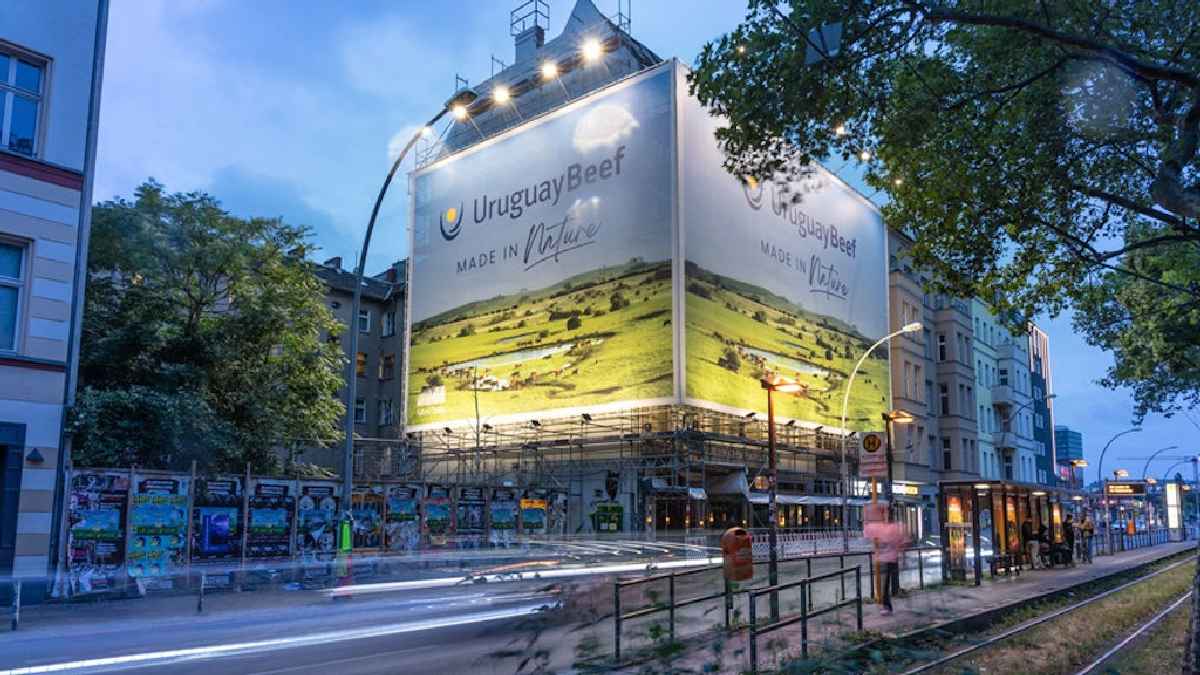
Uruguay has a unique natural advantage: much of its territory is covered by native grasslands, home to thousands of animal and plant species. In this environment, cattle roam freely in the open, feeding on natural pastures.
This extensive production model is the origin of beef renowned for its flavor, nutritional quality, traceability, and sustainability. Furthermore, Uruguay is distinguished by raising hormone-free cattle, conserving one of the largest grassland ecosystems in the region, and having been designated by the FAO as co-chair of the International Year of Grasslands and Pastoralists 2026, in recognition of the value of its production system.
Therefore, the National Meat Institute (INAC), through its promotional brand Uruguay Beef, is developing a communication campaign to convey these attributes. Its central concept, Made in Nature, is not just a creative concept: it reflects the way Uruguay produces its beef.
With this message, INAC chose Germany and the Netherlands to carry out the campaign because they are the two European markets where Uruguayan meat has the greatest presence, with relevant importers and distribution at the retail and restaurant level.
The initiative also aligns with new consumer trends in Europe, where food origin, sustainability, and animal welfare are increasingly valued. In this context, Uruguay was classified as a low-risk country for deforestation under the new European Union Deforestation Regulation (EUDR), consolidating a competitive advantage in a market that prioritizes these qualities.
Two markets, one same trust
The Netherlands accounts for 40% of Uruguayan beef exports to Europe, with the port of Rotterdam serving as its main gateway to the continent. Germany, in turn, has established itself as the second largest destination by volume, boasting strong and long-standing importers of Uruguayan beef and a presence throughout the country.
In Germany, the campaign developed by INAC reaches more than 3.5 million people in the country’s ten largest cities, including Berlin, Hamburg and Munich.
Germany’s biggest screen talks about Uruguay
The campaign combines Instagram, Facebook, YouTube, print and digital media, and high-impact outdoor advertising on 150 digital screens located in the country’s main train stations. In addition, there are two large billboards: one in Berlin and the campaign’s centerpiece, The Whale, Germany’s largest LED screen. The screen is located in Hamburg’s central station, through which more than 500,000 people pass every day.
A major initiative that seeks to consolidate Uruguay’s position as a supplier of natural and reliable meat, bringing to Europe a production model that finds its best expression in Made in Nature.