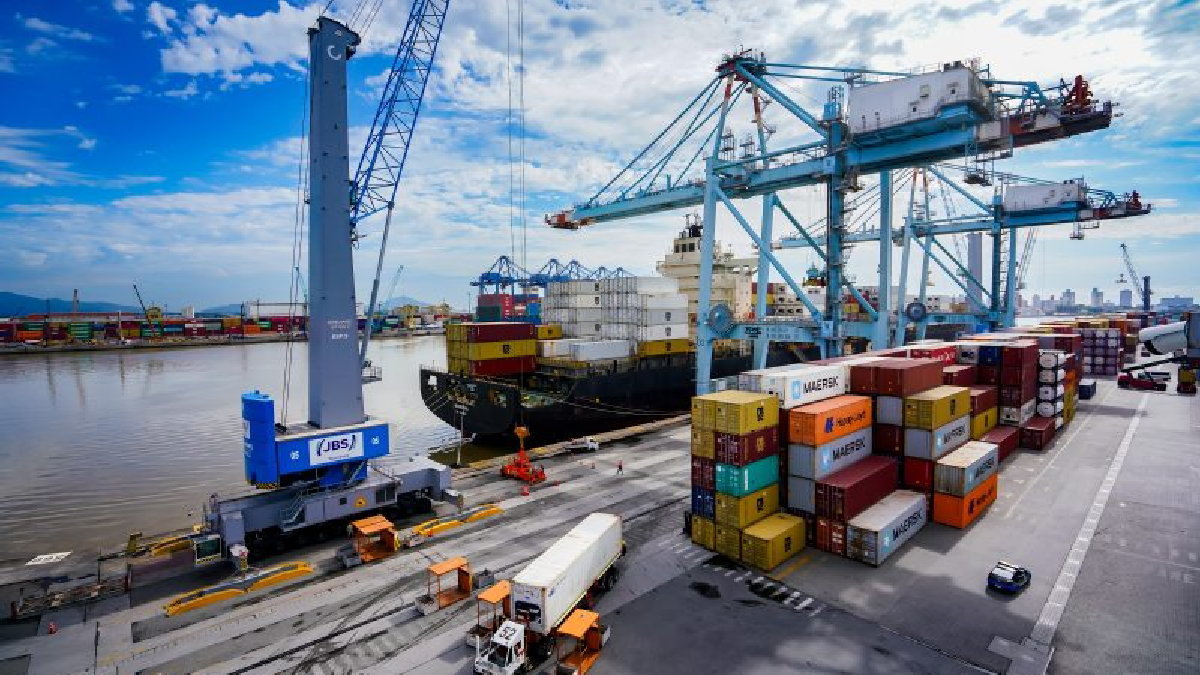
Traffic increased by 62% between the first and second year of operation; a new investment of R$ 15.2 million modernizes container inspection and expands truck traffic.
JBS Terminais, a JBS business, completes two years managing the Port of Itajaí, in Santa Catarina, with over 800,000 TEUs handled and nearly R$ 250 million invested in the recovery, modernization, and expansion of the terminal’s capacity. In October 2026, the company will announce a new investment of R$ 15.2 million to modernize cargo inspection and increase truck traffic.
From January to September 2026, the terminal handled almost 500,000 TEUs, a volume 73% higher than that recorded in the same period of 2022, before the suspension of activities. With the investments made since October 2024, the operational capacity has reached up to 600,000 TEUs per year.
“In two years, we have made progress in handling, infrastructure, and connectivity. We have invested in restoring the terminal’s operational capacity and, as volumes have grown, we have continued to expand and modernize the structure. The goal is to offer customers efficiency, cost competitiveness, and predictability for their operations”, says Aristides Russi Junior, president of JBS Terminals.
What does the new investment cycle include?
The new investment cycle modernizes container inspection and increases truck processing capacity at the Port of Itajaí. Check out the areas of focus:
- X-ray inspection: the terminal has started operating the Varex VXP6, equipment that examines the interior of containers without opening the units, with higher image quality and precision.
- More gates: the expansion from eight to ten gates is underway, with two new weighing lines to increase the flow of vehicles accessing the terminal.
- Yard 25% larger: the demolition of the old Warehouse 3 and the incorporation of area C, currently under construction, expand the operational area of the yard.
- Increased capacity: The expansion of the yard increases the terminal’s capacity by 80,000 TEUs per year. The change also allows for better use of customs areas.
Since the start of operations, investments have also included the acquisition of two mobile cranes, each with a capacity of 125 tons and a reach of up to 20 rows of containers, in addition to the incorporation of 14 reach stackers into the operation, capable of moving up to 45 tons and stacking up to five containers.
The infrastructure for refrigerated cargo has been expanded to more than 1,700 outlets, and the terminal now has eight reversible gates, which can have their entry or exit direction changed according to operational demand. More recently, the company added 25 trucks to the operation between the quay and the container stacks, now carrying out this movement entirely with its own fleet.
More routes and customers
Operational progress has been accompanied by increased connectivity between Itajaí and international trade. Currently, the terminal operates 10 regular shipping lines, with routes to Asia, Europe, the Americas, the Middle East, and Africa. This month, it will also begin receiving the ZFS/AS2 service from ZIM and Hapag-Lloyd, expanding options for direct connections to Asia.
Starting in January 2027, the terminal will also operate the SEAS2/ESAS2 service, one of the largest port call shipping services in Brazil, with the participation of shipping companies CMA CGM, COSCO, OOCL, PIL, Evergreen and Yang Ming.
“ We have built an operational base that allows us to seek new routes and expand Itajaí’s participation in the region’s foreign trade. The next step is to continue preparing the terminal to receive more cargo and offer new connections to the industry in the South of the country”, says Russi Junior .
Impact in Itajaí
The growth of the operation was also reflected in the workforce. Since October 2024, the number of employees has increased from 77 to 405, in addition to approximately 600 indirect jobs. During this period, the terminal’s activity contributed to generating more than R$ 360 million in the local economy of Itajaí.