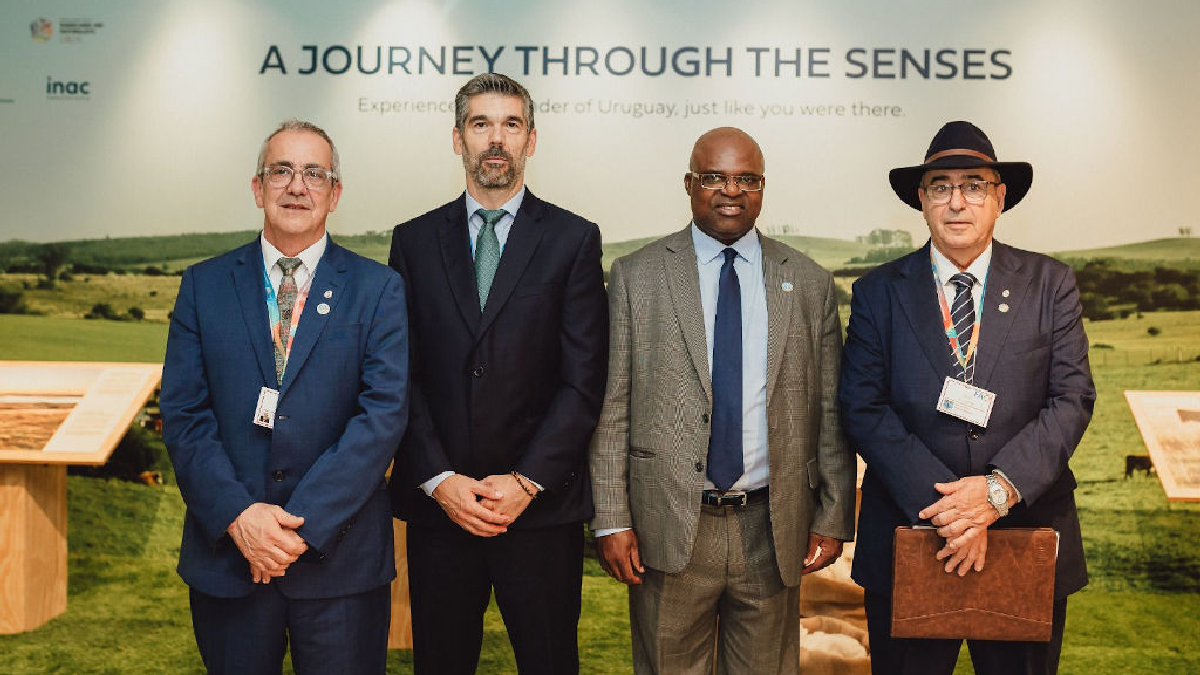
Within the framework of the One Health Conference of the Food and Agriculture Organization of the United Nations (FAO), Uruguay presented an original exhibit at FoodSLab, located in the FAO headquarters museum in Rome, a space dedicated to promoting the exchange of knowledge and experiences on sustainable food systems.
The exhibit, “A Journey Through the Senses,” invited participants to explore Uruguayan livestock production through its landscapes, traditions, culture, and food. Through an immersive experience, Uruguay showcased the richness of its natural resources, rural traditions, and cultural heritage, inviting visitors to discover the history, people, and territories that give rise to its food.
The initiative was also developed within the context of the International Year of Grasslands and Pastoralists 2026, a commemoration that seeks to highlight the contribution of grasslands and those who manage them to biodiversity conservation and sustainable development. Uruguay co-chairs this commemoration with Mongolia.
Through an experience that combined flavors, aromas, textures, sounds, and images representative of the Uruguayan countryside, attendees learned more about natural grasslands, livestock culture, rural heritage, and the role of producers as custodians of ecosystems fundamental to sustainable food production. The experience also included tastings of Uruguayan meats and an exploration of the history, knowledge, and work that make the production of this internationally recognized quality food possible. The activities generated great interest among conference attendees, with more than 1,000 visitors over the three days.
The INAC delegation, comprised of its president, Gastón Scayola, included Sustainability Manager Gianni Motta and Sustainability Coordinator Virginia Hernández, who participated in the activities at FoodSLab and the FAO exhibition spaces. Their involvement reaffirmed the institution’s commitment to promoting sustainable livestock systems, conserving grasslands, and exchanging experiences in international forums.
To kick off the activities, an opening ceremony was held, bringing together national and international authorities, diplomatic representatives, delegates, and specialists from various countries. Among those participating were the Minister of Livestock, Agriculture, and Fisheries, Alfredo Fratti; the Ambassador and Permanent Representative of Uruguay to the United Nations agencies in Rome, Alfredo Bogliaccini; the Assistant Director-General of the FAO, Godfrey Magwenzi; and the President of the National Meat Institute, Gastón Scayola.
During the welcoming speech, the Minister of Livestock, Agriculture and Fisheries, Alfredo Fratti, highlighted the opportunity that these types of spaces represent to show the world the attributes that distinguish Uruguay.
Ambassador Alfredo Bogliaccini highlighted the importance of Uruguay’s presence in multilateral forums, where the country can share its experience, promote dialogue, and contribute to building solutions for global challenges related to sustainable development.
For his part, Scayola pointed out that the proposal invites visitors to discover a history built over more than 400 years, where nature, animals and people have coexisted for centuries, and where knowledge and practices linked to livestock production have been passed down from generation to generation, giving rise to one of the most unique livestock production systems in the world.
He emphasized that in Uruguay, livestock production transcends its economic dimension and is part of the national identity, based on the natural grasslands of the Pampa biome and on generations of producers who have lived with these ecosystems, preserving them while producing quality food.
The president of INAC noted that, with a population of just 3.5 million, Uruguay produces food for more than 35 million people worldwide, actively contributing to global food security. He also emphasized that the country has successfully established a model that integrates the economic, social, and environmental dimensions of sustainability.
Finally, FAO Deputy Director-General Godfrey Magwenzi emphasized that food allows us to understand the culture, history, and identity of countries, and noted that the proposal presented by Uruguay invited us to look beyond the final product to understand the link between people, landscapes, traditions, and the production decisions that make food possible.
Furthermore, she emphasized the importance of moving towards agri-food systems that provide nutritious food and decent livelihoods, while protecting the environment and strengthening resilience. In this context, she commended Uruguay’s leadership as co-chair, along with Mongolia, of the International Year of Grasslands and Pastoralists 2026, highlighting the fundamental role of grasslands and those who manage them in biodiversity conservation, rural development, and food security.
As part of the activities planned for September 21, 22, and 23, various cooking classes will be held, led by chef Sebastián Manito, who will share recipes inspired by Uruguayan culinary traditions. These sessions will showcase how natural resources, knowledge passed down through generations, the work of producers, and the country’s cultural heritage come together to create high-quality foods recognized in international markets.
Uruguay’s participation in FoodSLab reinforced the messages promoted during the One Health Conference on the need to promote sustainable agri-food systems that integrate the health of people, animals and the environment, demonstrating how pasture-based livestock production can simultaneously contribute to food security, the conservation of natural resources and the development of rural communities.
“A walk through the senses” was part of the varied agenda of activities with which Uruguay continues to internationally position its sustainable livestock production model, highlighting the value of its natural resources, the work of the producers, rural culture and its commitment to the responsible production of food for the world.