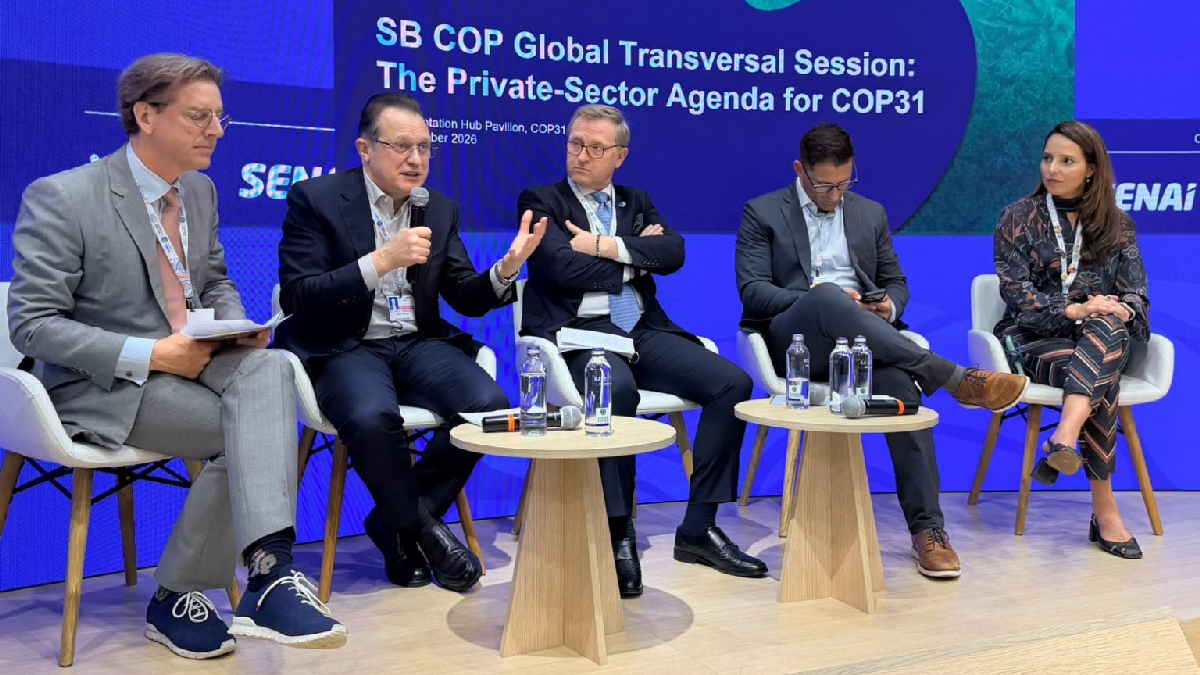
Sustainable agriculture only gains scale when it combines economic return for the rural producer, applicable solutions in the field and environmental benefits, said Gilberto Tomazoni, Global CEO of JBS during COP31.
In two sessions dedicated to the transformation of food systems, the executive highlighted initiatives that combine productivity gains, economic incentives and environmental benefits, in addition to the need to expand access for small producers to these solutions.
“It is not possible to build a food system without economically sustainable producers,” stated Tomazoni in the first session, dedicated to the private sector’s contributions to the COP31 presidency. At the meeting, the executive presented three of the 13 projects selected by the Working Group on Sustainable Food Systems of the Sustainable Business COP (SB COP). The task force, led by Tomazoni, had already discussed at New York Climate Week in 2025 how to expand producers’ access to technology, knowledge, and financing.
In the panel “Transforming Agriculture and Food Systems,” Tomazoni emphasized that producers need to be at the center of this transformation. According to the executive, expanding access to already tested technologies and practices is fundamental for productivity gains and environmental benefits to reach farms of different sizes and regions.
An example of a commercial incentive presented by Tomazoni during the first meeting was Farm Assurance, a JBS program in Australia that brings together approximately 3,000 beef suppliers. The initiative combines technical support and independent certification, allowing ranchers who meet the program’s criteria to supply premium brands.
According to an analysis conducted by Farm Assurance in 2024, in the previous five years participants received, on average, 7.8% above the market reference price. Compared to Australian averages, the herds of participating farms recorded an average daily weight gain over their lifetime between 15% and 50% higher and an age at which animals were sent to the industry between 16% and 30% lower.
In the area of animal nutrition, Tomazoni cited AjiPro™-L, a technology developed by Ajinomoto for dairy cows. The formulation protects lysine during its passage through the rumen, allowing the amino acid to be absorbed in the small intestine. According to the materials presented, the solution has the potential to improve feed efficiency and productivity, as well as reduce costs and estimated greenhouse gas emissions.
Tomazoni also presented the example of the Roncador Group, which develops an integrated system of agriculture, livestock farming, and soil management in an operation covering more than 53,000 hectares in the transition zone between the Cerrado and the Amazon. According to materials presented by the working group, the initiative recorded a 50% increase in soybean productivity and a change in the carbon balance, shifting from net emissions to net removals. Data from the SB COP report for COP30 indicate that the annual balance went from approximately 17,500 tons of CO₂ equivalent in net emissions in 2007/2008 to 231,600 tons in net removals in 2019/2020.
In this type of system, an area used for grain cultivation can be used for pasture after the harvest and for raising animals at another time of year. Crop rotation allows the same land to be used throughout the year and keeps the soil covered between crops. Commenting on the experience, the executive highlighted that the pursuit of productivity gains also brought environmental benefits.
Following the session, the working group presented three priorities for advancing this agenda: sustainably increasing productivity and strengthening rural income, improving the scientific basis and measurement of results, and expanding access to financing through collaboration between the public and private sectors.
For Tomazoni, removing the barriers that hinder small producers’ access to these solutions is part of the effort to strengthen food security. “We have the knowledge, we have the technology, we have proven examples. We need to accelerate adoption,” he stated.