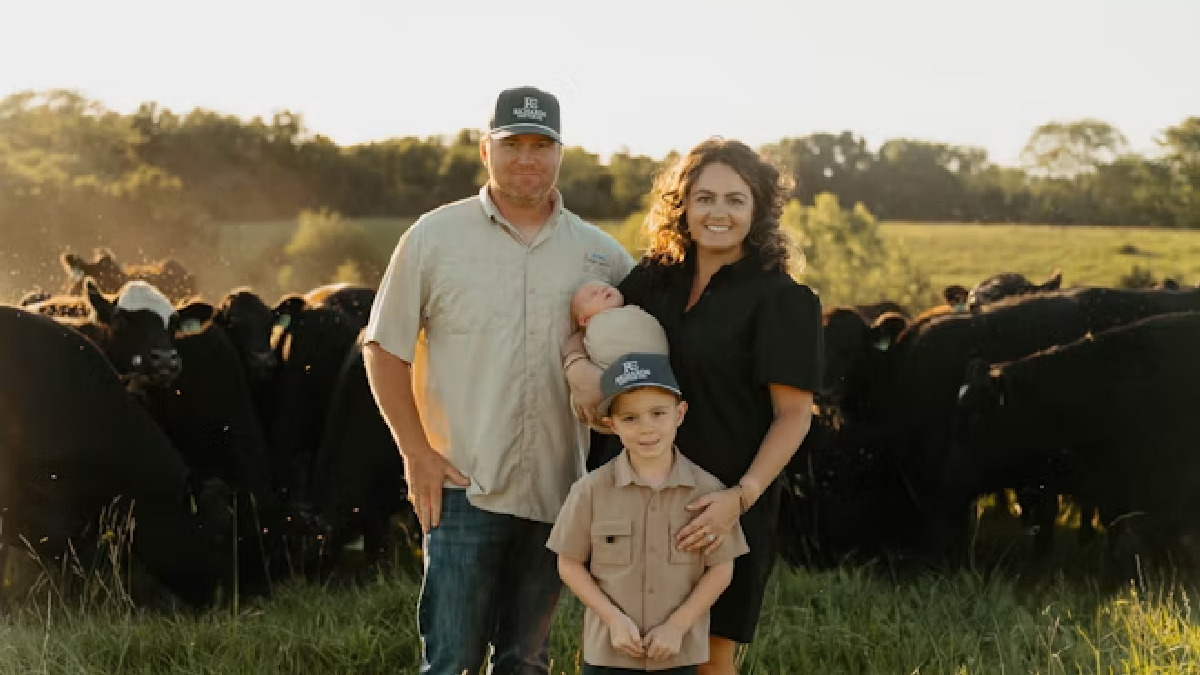
Great beef starts with healthy land. For the family ranchers who supply JBS USA’s Imperial American Wagyu Beef brand, caring for pastures, soil, and water isn’t a side project – it’s the foundation of everything they raise.
In southwest Iowa, Bret and Nevada Richards run every acre on a rotation. They move their cows and calves to fresh grass every four to seven days, giving each paddock time to rest and recover. The results are impossible to miss.
“Anytime you can give the pasture a rest, you can tell the difference,” Bret said. “It might be August 15, dry, hot and nasty out, and that grass will come back green and pretty. It will look just like April 15.”
That rest doesn’t just help the land – it feeds better calves. “I feel that our young calves, before we wean them and put them into the Imperial program, have a good start because of the added nutrients and the quality of feed,” Bret said. “They’re not just on old, dry summer grass and stunted out.”
More than a thousand miles south, in Madison, Florida, Josh Churchwell manages a very different landscape with the same mindset. Sitting close to Florida’s groundwater, his family works hand-in-hand with conservation experts to protect the resources their operation depends on.
“We work very closely on our groundwater – it’s very important here,” Josh said. “We’re constantly working with our NRCS (USDA’s Natural Resources Conservation Service) and different soil and water management people. We do a lot of rotational grazing, and we’re also no-till drilling some winter forages where we’re not having to break up the ground.”
For Josh, stewardship is a promise to the next generation. “We want to make sure we’re doing the right thing and leave the land better than we found it, for the kids and the cattle and everything,” he said.
On limited acreage, that means balancing productivity with care. “We’ve got to be more efficient and more productive, but also take care of the land,” Josh said.
From Iowa pastures on a rotation to Florida forages planted without turning the soil, these producers share a simple conviction: healthy land and high-quality beef go hand in hand — and the best way to protect both is to manage them well, season after season.