The Ministry of Agriculture, Fisheries and Food (MAPA) has confirmed the first cases of Shamonda virus in Spain, after detecting the SHAV-EU1 variant on seven cattle farms in the provinces of Córdoba and Toledo.
The confirmation, made on September 22, comes from the Central Veterinary Laboratory (LCV) in Algete, which serves as the National Reference Laboratory. Furthermore, new suspected cases are being investigated in other parts of the country.
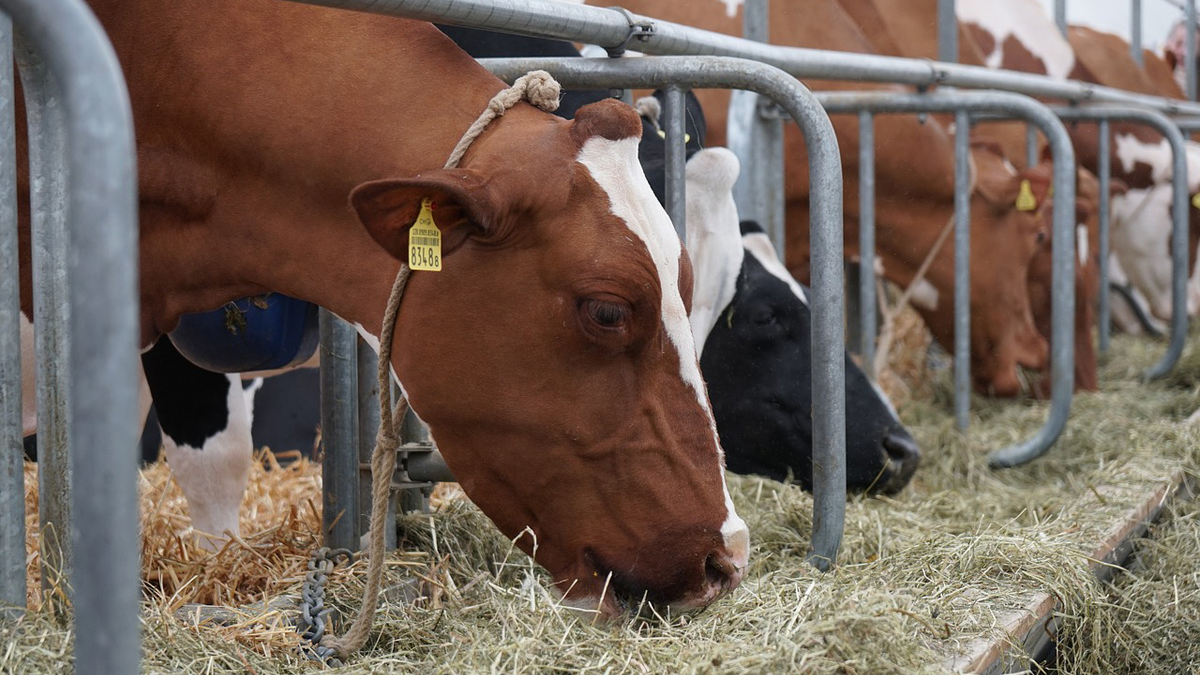
The affected farms have presented symptoms similar to those observed in recent months in other European countries, mainly fever, diarrhea and decreased milk production .
Shamonda virus (SHAV) is an Orthobunyavirus of the Simbu serogroup, closely related to other viruses of veterinary importance such as Schmallenberg virus (SBV) and Akabane virus (AKAV). It is primarily transmitted through the bite of small blood-sucking insects of the genus Culicoides , the same vectors involved in diseases such as bluetongue and epizootic hemorrhagic disease (EHD).
Based on current knowledge, there is no evidence of significant direct transmission between animals. However, it has been confirmed that the virus can cross the placenta and reach the fetus during gestation.
Loss of production and potential reproductive problems
Cattle are one of the species most affected. In adult animals, the infection can cause fever, diarrhea, lethargy, and a temporary drop in milk production. Despite these symptoms, most adult cattle recover, and to date, no mortality directly attributable to the virus has been observed. However, its widespread presence on farms and the temporary loss of production can have significant production and economic consequences.
One of the main unknowns lies in the effects on reproduction. In Switzerland, the virus has been detected in several aborted bovine fetuses, supporting the possibility of transplacental transmission. European authorities and research centers are therefore maintaining special surveillance of abortions, stillbirths, and births of animals with malformations.
In fact, Switzerland has decided that, starting in October, its surveillance will focus particularly on abortions and young animals affected or with malformations, with the aim of determining more accurately the clinical impact of the virus.
It is not a zoonosis
Following the detection of the first cases in Spain, the Spanish Ministry of Agriculture, Fisheries and Food (MAPA) clarified that the Shamonda virus is not considered a zoonosis, meaning it is not naturally transmitted from animals to humans, and that, for the time being, it does not require the adoption of restrictive measures. It is also not currently a notifiable disease in Spain.
The Friedrich-Loeffler Institute (FLI), Germany’s federal reference center for animal health, also points out that Simbu serogroup viruses are not generally considered zoonotic agents and, with current knowledge, do not pose a relevant risk of infection to humans .
Two variants are circulating in Europe
The arrival of the virus in Spain comes after its rapid spread across Europe during the summer of 2026. Shamonda was originally identified in Nigeria in the mid-1960s and, prior to this year, had been described sporadically mainly in Africa and Japan.
The new European circulation began to be detected this summer in cattle in Switzerland, France, and southern Germany , and subsequently spread to other territories. Genetic research has identified two distinct variants , named Shamonda-Europe 1 (SHAV-EU1) and Shamonda-Europe 2 (SHAV-EU2).
The SHAV-EU1 variant , which is the one now detected in Spain, has circulated primarily in Switzerland, France, southern Germany, and Austria. The second variant has been identified in Belgium, the Netherlands, northern Germany, and northwestern France. So far, research has found no evidence that the two variants cause different clinical symptoms.
With the confirmation of the first seven cases in Córdoba and Toledo, Spain joins the European countries where the circulation of the Shamonda virus has been officially confirmed , while surveillance continues in the face of new clinical suspicions and, especially, regarding its possible reproductive consequences in livestock.