Spain asks to extend aid to cases of non-renewal of agreements with third countries
The Government is calling on the European Commission to strengthen the external dimension of European fishing and intensify negotiations with Mauritania to guarantee the continuity of the fleet in that fishing ground.
The Minister of Agriculture, Fisheries and Food, Luis Planas, argued in Brussels for the need for the European Union’s (EU) future fisheries policy to combine the sustainability of resources with the profitability of the activity and the renewal of the fleet. According to Planas, these objectives must be reflected both in the future multiannual financial framework and in the new Common Fisheries Policy (CFP), as well as in the reform of the European Maritime, Fisheries and Aquaculture Fund (EMFF), with sufficiently ambitious funding to meet the sector’s needs and address its modernization and renewal.
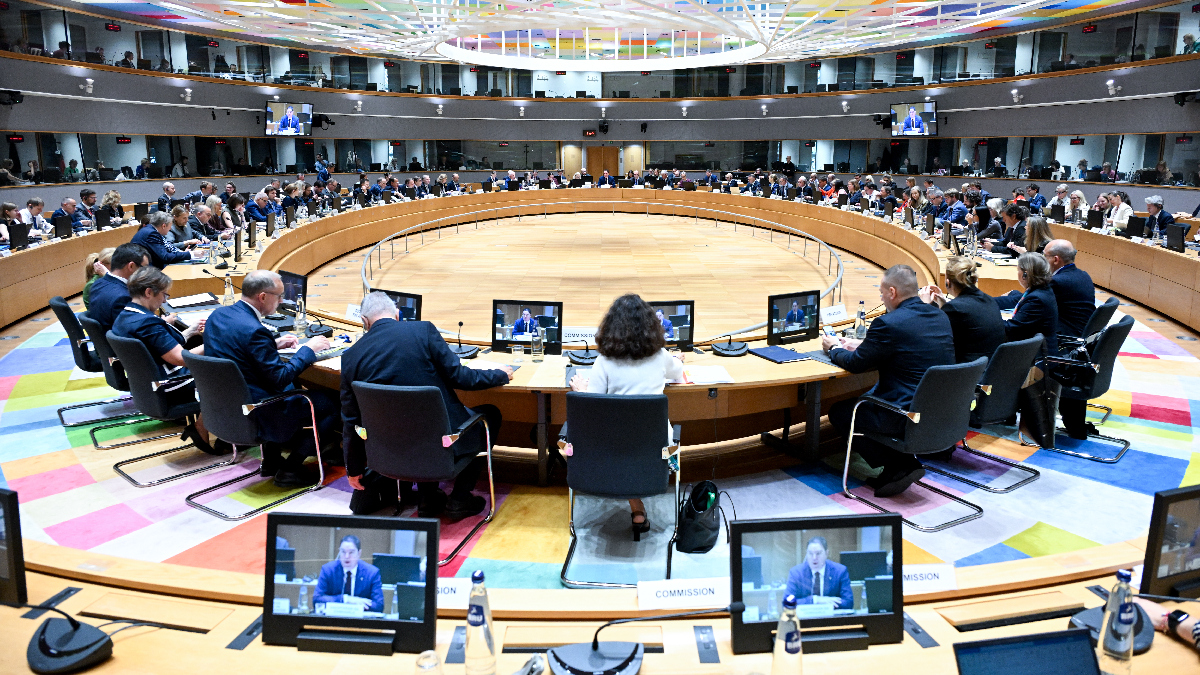
At the EU Council of Agriculture and Fisheries Ministers, Planas stated that Europe must maintain the efforts made in recent years to guarantee the sustainability of fish stocks and that it is also necessary to make progress on the economic viability and future of the sector. “It’s good that we’ve made progress and we have to maintain sustainability, but we must also increase the profitability of our shipowners and our fishermen,” Planas said.
The minister believes this objective also requires considering the future of the fleet, facilitating its renewal and modernization. Spain argues that the new regulations should allow for public funding to support the construction of new vessels to replace obsolete units, as well as investments aimed at improving safety, habitability, energy efficiency, and working conditions.
Strengthening the EMFF in the face of reduced fishing situations
Planas has assessed the progress of the Commission’s proposal on the EMFF, especially the possibility of granting aid when the fishing opportunities of a certain stock are significantly reduced.
The proposal includes a new provision for temporary fishing cessation when there is a year-on-year reduction in fishing opportunities exceeding 40%. The minister has requested that this be extended to cases of non-renewal of agreements with third countries. This measure represents progress, but he has called for extending the current maximum limit of twelve months so that aid can adequately reflect the actual duration of the difficult situations.
Spain has proposed that this mechanism could be applied when fishing agreements with third countries are not renewed, “so that the shipowners and fishermen affected can have a support instrument in the face of the loss of fishing opportunities resulting from these situations.”
He also called for a review of the concept of fishing capacity, as it has become obsolete, since it is managed through other parameters such as quotas or effort, in order to advance in the differentiated recognition of tonnage and power intended only to improve habitability, safety and energy transition.
It has requested the incorporation of compensation when environmental protection measures are applied to non-fishing species and when impacts occur due to certain environmental phenomena, such as the uncontrolled proliferation of the so-called “Asian algae”.
Regarding fleet modernization measures, Spain maintains the need to facilitate, with public aid, the construction of new fishing vessels to replace obsolete ships, and to eliminate restrictions for vessels over 24 meters in length.
Strengthening the external dimension of European fisheries:
The Minister has promoted a debate on the importance of maintaining the presence of the European fleet in the fishing grounds of third countries within the framework of the Common Fisheries Policy, given the key role the European external fleet plays in international fisheries governance. “We apply the highest standards in the world in terms of sustainability and, furthermore, we practice combating illegal, unreported, and unregulated fishing,” stated Luis Planas.
This point has been supported by numerous Member States who agree that it is necessary to support the activity of the Union’s external fleet and ensure that only products that meet the same sustainability standards as those from the European fleet have access to the European single market.
Along these lines, the minister also called on the European Commission to intensify contacts with Mauritania to advance the renewal of the current fisheries protocol, which expires on November 14. “The protocol concludes on November 15, and we want the Commission to intensify its contacts because we would not want the European fleet, and in particular the Spanish fleet, to be forced to leave those fishing grounds,” he stated.
The current protocol, in force since November 2021, allows vessels from ten member states access to Mauritanian waters and establishes fishing conditions for different fleet categories. Planas emphasized that renewing the agreement is not just a Spanish issue, but affects the interests of various states, including Mauritania, given the importance of fisheries cooperation and the financial support associated with the agreement.
Fishing opportunities to guarantee the activity:
In negotiations with the United Kingdom regarding fishing opportunities for 2027, Spain has advocated for sufficient total allowable catches (TACs) to avoid overfishing, as well as fishing opportunities for northern hake that allow the activity to be maintained sustainably, also from a socioeconomic perspective. Regarding the recommended reduction for blue ling, Spain considers it necessary to take into account its economic impact.
In consultations with Norway and the coastal states, Spain has identified as priorities guaranteeing access for the European fleet to Norwegian waters and Svalbard, maintaining the EU’s historical quota, and recovering the 5,000 tons of cod not caught in 2021. It has also advocated reaching a comprehensive agreement on mackerel and blue whiting that allows for the sustainable management of these stocks and protects the interests of the Union.