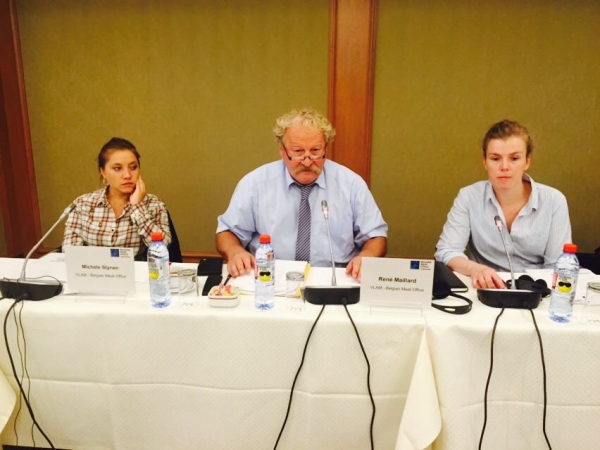
Most Belgians remain big meat eaters, although the consumption of meat, poultry, and game amongst the Belgian population decreased by 18%, from 35 kilograms per capita in 2008 to 29 kilograms per capita in 2016, according to the data presented today during the Belgian Meat Round Table event.
Nearly 38% of Belgians declared that they consume less meat than a year before, while 28% of meat eaters consider eating less meat in the future, and 26% have doubts regarding this subject.
‘The Belgian is and remains carnivore’
Home consumption of meat, poultry, and game reached 29 kilograms per capita in 2016. Furthermore, 60% of the Belgian meat consumers declared that they eat meat at least 4 times a week, and 25% said their intake of meat is on a daily basis.
Regarding the consumption of fish and fish products, 20% of the people questioned said that they eat fish once a week. Home fish consumption reached 6 kilograms per capita in 2016, the daily penetration of fish being situated at 11%.
In addition, 20% of Belgians declared that they eat meat substitutes once a week. The home consumption for meat substitutes is 0.3 kilograms per capita and the daily penetration for vegetarian products reached 10%.
The main reasons for Belgians not excluding meat from their diet were: the lack of knowledge about alternatives, the difficulty, and fear of changing habits and the familial context (their partners or children that eat meat).
Belgians find it difficult to not eat meat, but the top 5 substitutes listed by the people questioned are fish, pasta & pizza, eggs, vegetables and deep fried snacks (in the order mentioned).
Finally, vegetarian meat substitutes are unpopular amongst the Belgians. The main reasons for this are:
- not used to them, little knowledge
- Fake meat equals unnatural/not healthy
- bad taste – unnatural and therefore distasteful, a distasteful view, not like the original (meat)
- expensive alternative
- as ingredient difficult to use (difficult to flavor)
- limited offer
According to the Belgian consumer healthy food should not include too much sugar, fat or salt. It should be natural, without additives and unsprayed. A healthy diet would include not too much (red) meat, but definitely fish on a regular basis, lots of fruit and vegetables, preferably from own cultivation, home cooking (no ready meals), drinking a lot of water.
The information was based on the following sources:
GfK Belgium 2016 (panel research with 5,000 Belgian households)
Vleestracking 2017 (online quantitive research, 1,000 Belgians, age 18-64 – VLAM)
Marktmaker 2014 (online research community, 100 Flemings 18-64 jaar, by InSites Consulting for VLAM)
Marktmaker 2016 (online research community, 100 Flemings 18-64 jaar, by InSites Consulting for VLAM)