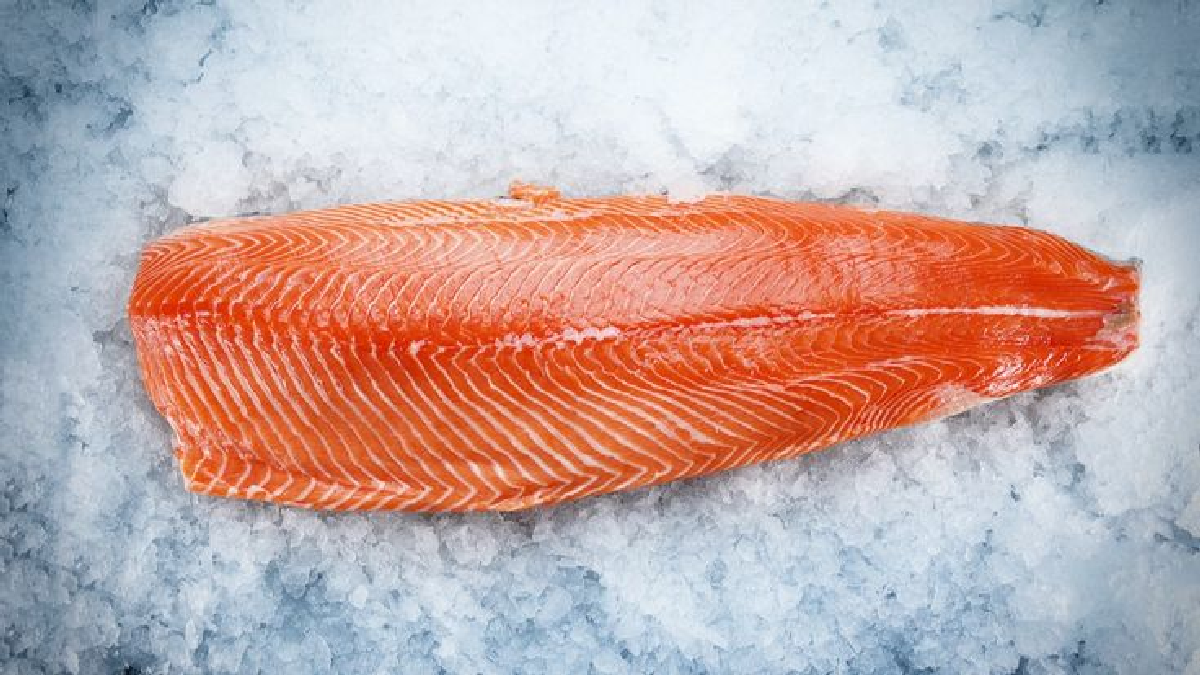
Norway wants to open up parts of its offshore waters for salmon farming, which is currently practiced along the coast and in fjords, where the industry is accused of causing environmental damage, AFP reports.
The Norwegian government proposed opening three areas in the North Sea and the Norwegian Sea, covering surfaces ranging between 364 and 2,437 square kilometers, for the development of offshore aquaculture.
The proposal has been placed under public consultation, with a deadline of February 17, 2027, for stakeholders to submit their feedback.
“Offshore aquaculture could become a significant contributor to value creation along our coasts in the coming years,” Prime Minister Jonas Gahr Støre said in a press release.
The farming of salmon—Norway’s flagship fish—is currently carried out primarily in floating cages along the coast and in fjords, but further expansion of the practice is held back by ecological and environmental concerns. Intensive salmon farming has drawn particular criticism over high concentrations of sea lice and fish escapes, which pose a threat to wild salmon migrating near the floating farms.
In addition, floating cages release waste, uneaten feed, and nutrients directly into the marine environment, along with substances used in treatments or installations that can affect the seabed and contribute locally to water eutrophication.
“We are facing several major challenges, particularly regarding animal welfare,” Prime Minister Jonas Gahr Støre told public broadcaster NRK.
Moving farms further offshore could help mitigate some of these issues.
A study published last month by the Norwegian Institute of Marine Research concluded that pressure from sea lice—parasites that weaken wild salmon and can be fatal to young fish—decreases significantly as fish farms are relocated further away from the coast.
However, largely due to greater distances and harsher weather conditions, offshore aquaculture is more complex and more expensive.
Seafood is Norway’s second-largest export sector after hydrocarbons: in 2025, export value reached a record 181.5 billion kroner (nearly €17 billion), of which 133.4 billion kroner came from aquaculture alone.