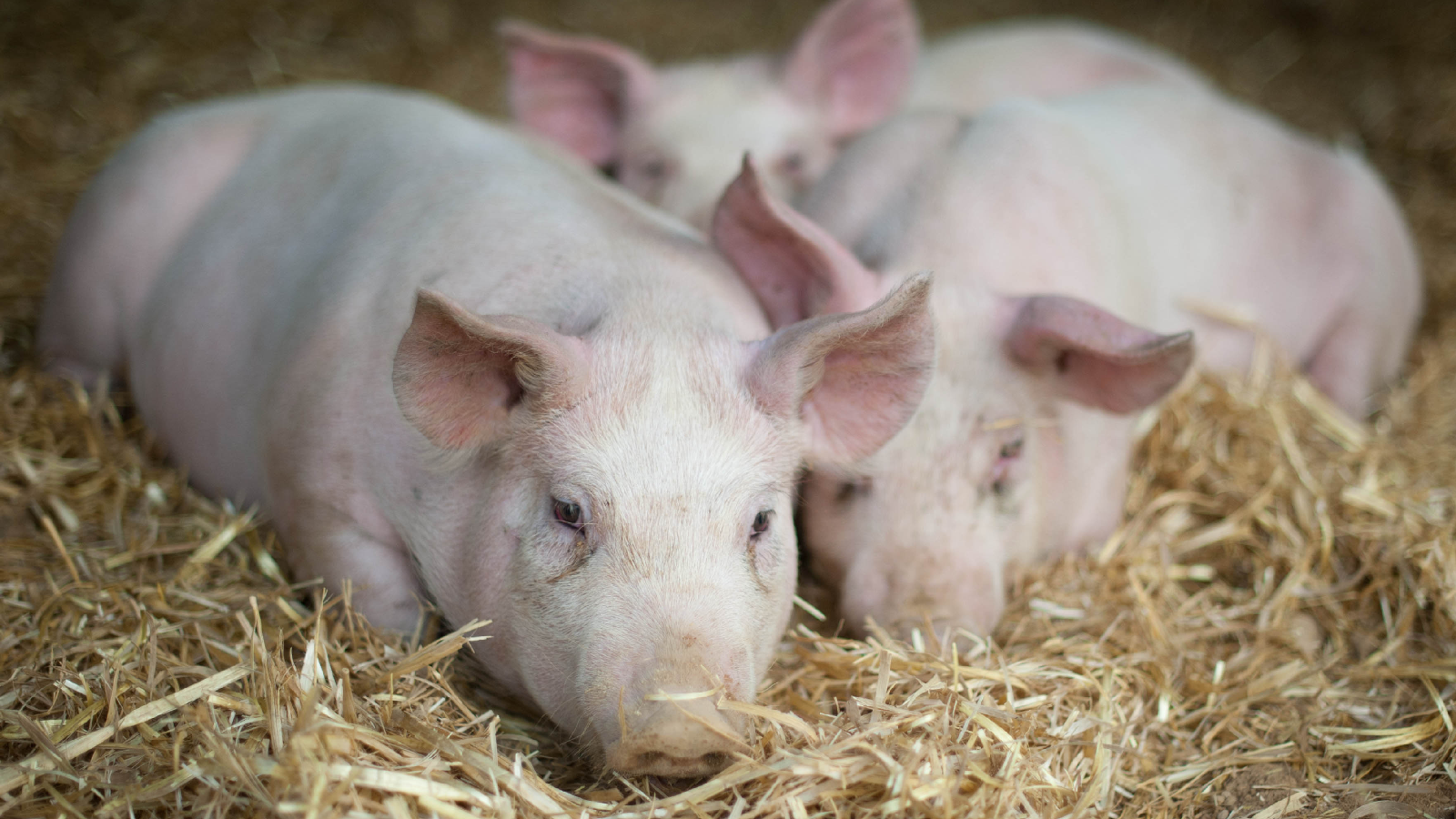
As of May 3, 2026, there were 14,700 pig farms in Germany. According to preliminary results from the livestock census published by the Federal Statistical Office (Destatis), this represents a decrease of 3.2% (490 farms) compared to November 3, 2025. Compared to the previous year (May 3, 2025), the number of farms fell by 3.6% (550 farms), and over the past ten years, by 40.0% (9,800 farms since 2016).
22.5% fewer pigs compared to ten years ago
The number of pigs kept in Germany was approximately 21.0 million as of May 3, 2026. Compared to November 3, 2025, the population decreased by 2.3% or 501,400 animals, but compared to the previous year, it increased slightly by 0.6% or 131,100 animals. Over the past ten years, the pig population has declined significantly by 22.5% (-6.1 million animals since 2016). This reflects the ongoing trend towards larger farms: while in 2016 a farm kept an average of around 1,100 pigs, ten years later this figure had risen to approximately 1,400 animals per farm.
Fewer fattening pigs, but significantly more piglets and young pigs than last year
The following picture emerges for the individual animal categories in pig farming: As of May 3, 2026, 9.0 million fattening pigs were kept in Germany. This is 2.5% fewer than on November 3, 2025 (-228,500 animals). This trend is also confirmed in a year-on-year comparison, where the decline was 4.2% (-394,300 animals). The number of piglets and young pigs in May 2026 was 10.6 million animals, also decreasing since November 2025 (-2.3% or -255,400 animals). However, compared to the previous year, there was an increase of 5.1% (+515,300 animals). The number of breeding sows in May 2026 was 1.4 million animals, 0.9% lower than in November 2025 (-12,300 animals) and 0.9% higher (+12,700 animals) than in May 2026.
Cattle population hardly changed within the last year
As of May 3, 2026, the cattle population in Germany amounted to approximately 10.4 million animals, including 3.6 million dairy cows. The cattle population thus remained stable compared to the previous year (+0.2% or 17,200 animals). However, compared to the reference date of November 3, 2025, the population decreased slightly by 0.7% (-67,800 animals). Looking at the past ten years, the downward trend continues: compared to May 2016, the cattle population fell by 17.6% (-2.2 million animals).
The dairy cow population saw a slight decrease of 0.2% (-7,900 animals) compared to November 2025 and a slight increase of 0.3% (+10,400 animals) compared to May 2025. Overall, the dairy cow population remained largely stable within the year. Over the past ten years, the number of dairy cows has decreased by 16.0% (-683,300 animals).
The long-term downward trend in the number of cattle farms continued: Compared to November 2025, the number of cattle farms fell by 1.8% (-2,200 farms) to 120,300 and the number of dairy farms by 2.0% (-900 farms) to 46,200. In a ten-year comparison since 2016, the number of cattle farms decreased by 18.7% (-27,600 farms) and the number of dairy farms by 35.2% (-25,100 farms).