Germany’s pig farmers are experiencing a paradoxical and economically disastrous situation: In the middle of barbecue season and coinciding with the FIFA World Cup, the pork market is collapsing. Instead of the expected summer peak, the base price is plummeting to a ruinous level of €1.50/kg carcass weight, resulting in heavy losses of around €50 per animal for piglet producers and pig fatteners – even though the oversupply of pork is primarily not in Germany, but in other European countries.
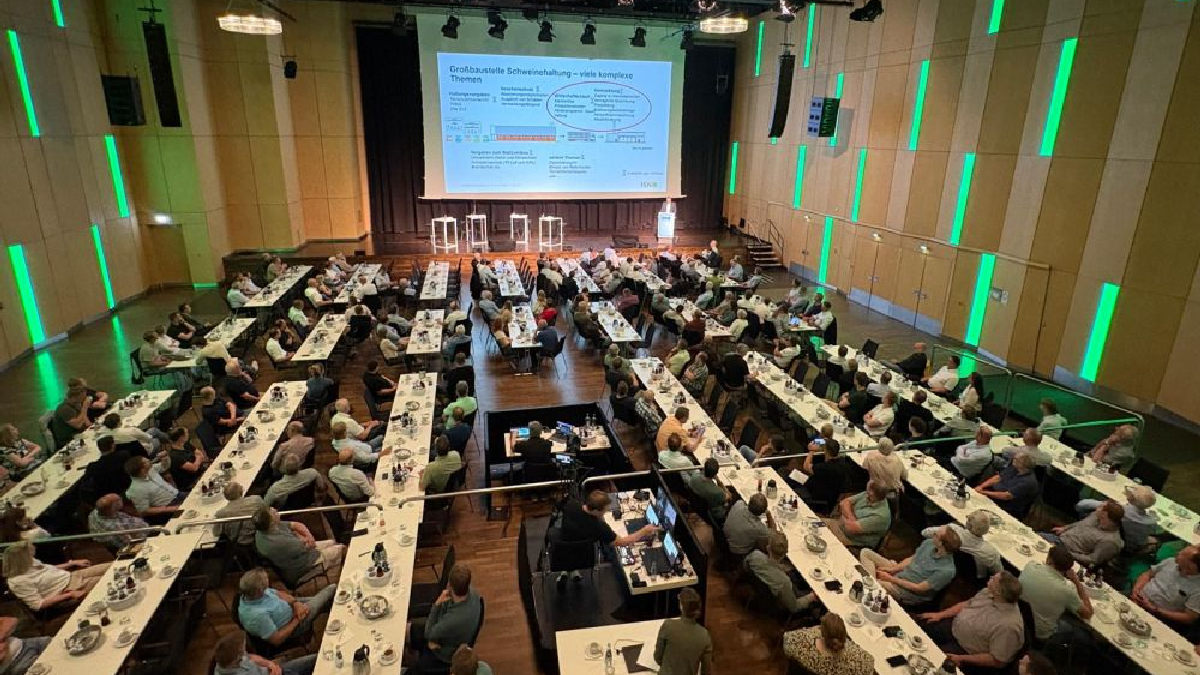
At its members’ meeting in Münster, the ISN (German Pig Producers’ Association) is examining the situation in pig farming and explaining the reasons for the current difficult market conditions. It is becoming clear that, despite widespread offtake agreements, farms are hardly able to protect themselves against global market risks. Many are therefore withdrawing from the market. Due to the changed market structures, the ISN believes the pricing system must be adapted as quickly as possible.
The ISN views the activities of the Federal Government within the framework of its export strategy and the introduction of a risk equalization reserve stipulated in the coalition agreement positively.
Right at the start of the meeting, Chairman Christoph Selhorst spoke frankly about the current market situation and drew a striking comparison: Just like with the weather, we’ve often experienced fluctuations between highs and lows. However, it’s exceptional to have frosty winter temperatures at this time of year. And that’s exactly what’s happening in the pork market right now. A price collapse in the middle of barbecue season, even coinciding with the World Cup – and all this with significantly reduced pig herds. Prices would actually be rising. We’re seeing that periods of low prices are becoming more frequent, and the price swings in pork are becoming more extreme and unpredictable.
If one link in a chain breaks, the whole chain breaks
The current situation in pig farming is so precarious because farms are simultaneously required to meet numerous regulations. Many pig farmers are choosing to exit the industry under these circumstances. Selhorst explains: ” Our share of the pie in the production chain must be large enough to feed us. If one link breaks, the entire chain collapses. Upstream and downstream sectors also lose their foundation – and the food retail sector can no longer achieve its ambitious goals.”
Export strategy and risk equalization reserve are correct and important
The ISN chairman expressly welcomes the German government’s export strategy: Federal Agriculture Minister Alois Rainer is focusing on the right thing. The export strategy is crucial right now, because we ultimately have to market the entire pig. Since the first outbreak of African swine fever (ASF) in Germany, important third-country markets for German pork have been closed. These markets would be an important outlet for reducing surpluses.
Selhorst also expressly welcomes the risk equalization reserve announced in the coalition agreement . Right now, we have to pay back taxes for past good years. This deprives businesses of the necessary liquidity in the midst of the crisis. The risk equalization reserve must be implemented quickly.
Structures have changed: adapt the pricing system
The German Pig Producers’ Association (ISN) is urging economic stakeholders to adapt the pricing system for pork, as the structures and supply relationships within the value chain have fundamentally changed. ISN Managing Director Dr. Torsten Staack clarifies the problem: ” Without a doubt, supply and demand determine the price, not costs. However, in light of significant global events, such as wars or animal diseases, markets are becoming increasingly volatile. German pig farmers can hardly protect themselves against these extreme fluctuations in revenue – despite their comparatively high production costs in Europe. Aside from the overall insufficient margins for producers, farms are facing considerable economic difficulties because the financial risk, which they themselves can barely influence, has become too high. Despite widespread offtake agreements, they are unable to respond adequately. Existing pricing systems no longer reflect the changed structures and therefore need to be expanded or adapted.”