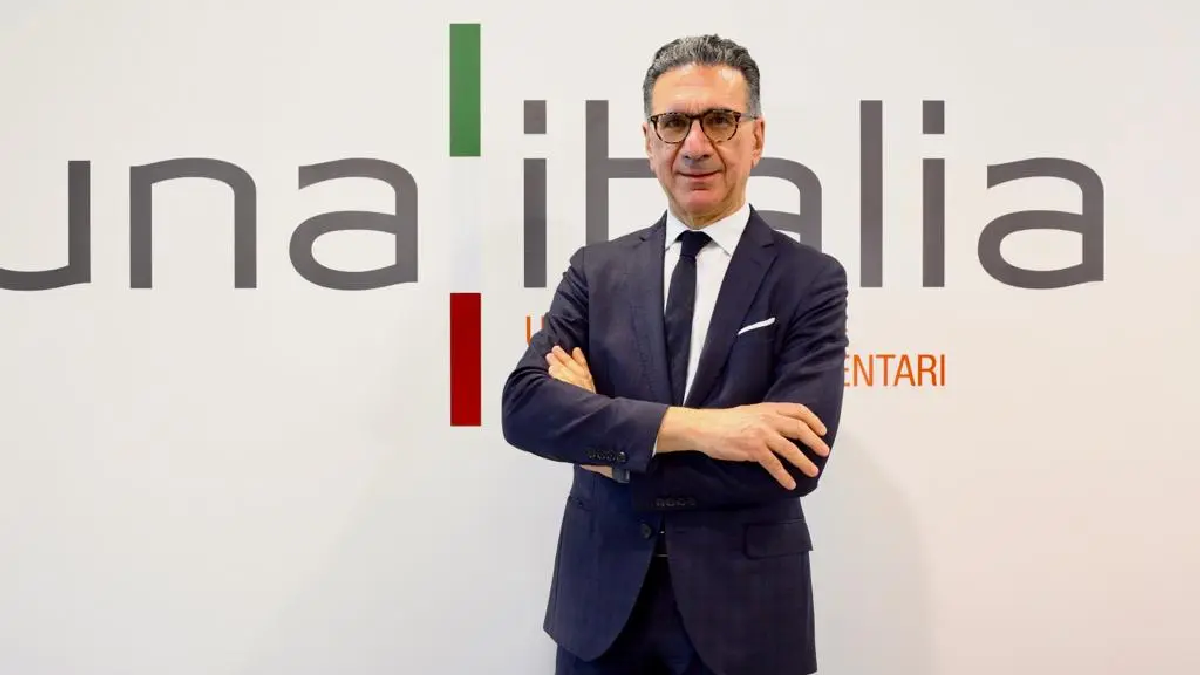
The Italian poultry supply chain continues to grow and strengthen its strategic role in the country’s economy and food security. Data presented by Unaitalia – the association of poultry and egg producers – at its Members’ Meeting held in Bologna, highlights a robust, competitive sector capable of meeting consumer demands in 2025. National poultry production increased by 1.73% compared to 2024, while per capita consumption reached an all-time high of 22.47 kg (+1.91%), confirming the central role of poultry in Italians’ eating habits. Today, nine out of ten Italians consume it, and the sector accounts for 44% of total household meat purchases. This growth in consumption is accompanied by a high level of production self-sufficiency, equal to 105.1%, allowing the supply chain to contribute significantly to the stability of national food supplies.
The egg sector also performed well, recording growth of 15% in value and 7.4% in volume, according to ISMEA data. Consumption reached 234 eggs per capita, up 7.3% from the previous year.
“Poultry meat and eggs confirm their role as nutritious, accessible foods that meet new consumer needs,” says Antonio Forlini, President of Unaitalia. ” The Italian sector’s performance is in line with major international trends. OECD/FAO estimates indicate that over half of the growth in global meat consumption expected by 2030 will be absorbed by poultry production, confirming their growing importance in global food systems.”
With approximately 64,000 employees and a turnover of €9.7 billion in 2025, the poultry sector represents one of the most significant sectors of the Italian agri-food industry. The total value is made up of €6.2 billion generated by the poultry sector and €3.73 billion by the egg sector.
These results are based on the integrated supply chain model, which guarantees high standards of control, traceability, and safety throughout all production phases. This model has also enabled significant sustainability results, as demonstrated by the 96% decrease in the use of antibiotics on livestock farms over the last decade and a 35% share of national production that meets animal welfare standards exceeding the minimum requirements set by law.
The sector’s results, however, come against a backdrop of significant international uncertainty. Political tensions in the Middle East and critical issues along major global trade routes are fueling volatility in energy, fertilizer, and agricultural commodity markets, with inevitable repercussions on livestock production costs. Added to this are the challenges of European trade policy and the need to ensure fair competition for companies in the sector.
“We welcome Europe’s shift in approach, which now appears more pragmatic, more attentive to business competitiveness, and more focused on combining economic, environmental, and social sustainability, ” Forlini stated . ” But the current context also calls for clear protection of Europe’s strategic interests. It is necessary to strengthen the resilience of supply chains and sources of strategic raw materials to ensure production continuity, employment, and food security. At the same time, ” the President continued, “opening up to new markets must proceed in accordance with the principle of reciprocity. It is unsustainable to demand increasingly higher health, environmental, and animal welfare standards from European producers without demanding similar guarantees from those exporting to the EU market. Only in this way will it be possible to avoid unfair competition, protect business investments, and preserve a productive heritage that generates economic value, employment, and development in local communities.”
“The Italian poultry supply chain,” Forlini concludes , “contributes every day to the country’s food security and the competitiveness of the entire national agri-food system. Protecting its production capacity means strengthening the resilience of Italy and Europe and guaranteeing citizens safe, accessible, and high-quality products, even in a historical period marked by growing global instability.”