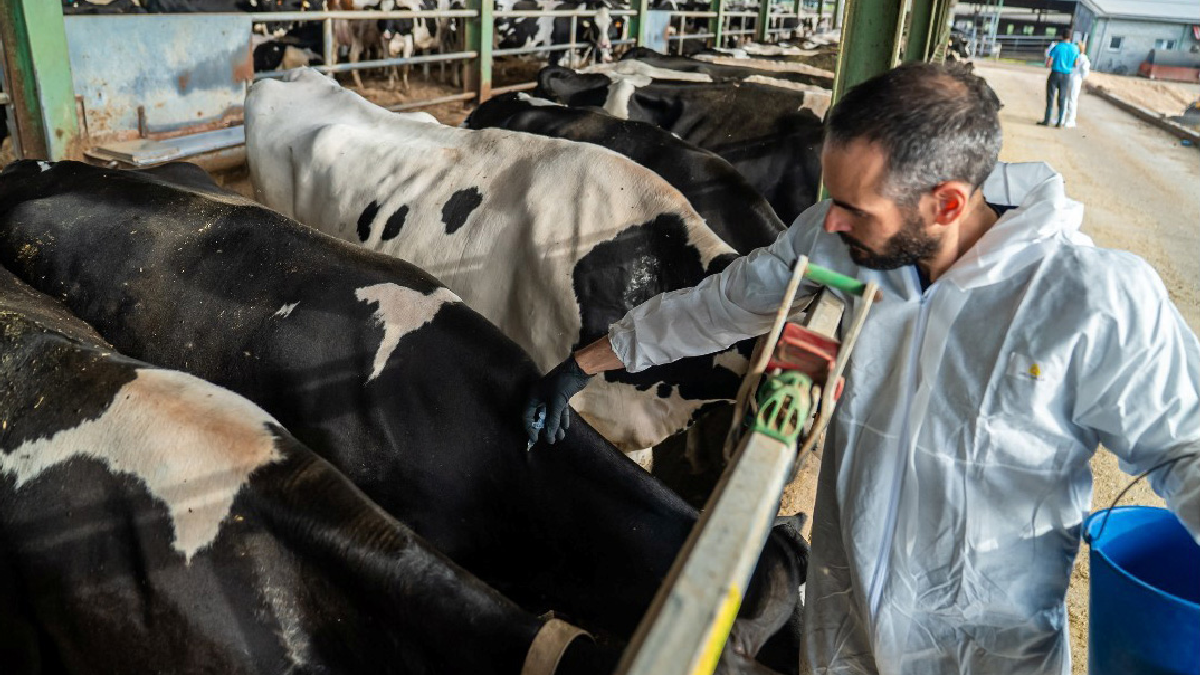
The Catalan government’s Department of Agriculture, Livestock, Fisheries and Food has announced €5.5 million in aid to compensate for economic losses and costs incurred by contagious nodular dermatosis (CND) in cattle farms.
The measure aims to reduce the economic impact of the health crisis and support farmers affected by the actions taken to control the disease.
The aid is aimed at farm owners who have suffered mandatory sanitary culling, restrictions related to animals destined for slaughter or other costs derived from official disease control measures.
Three lines of aid with applications open until November
The budget announced by the Generalitat is distributed across three lines of aid, for which application periods are now open:
- €3.5 million to compensate for lost income on farms where mandatory culling has been carried out. The application deadline is November 12 .
- One million euros to compensate for losses resulting from the confiscation of animal remains from farms subject to health restrictions and destined for slaughter. Applications can be submitted until November 6 .
- One million euros to cover other costs arising from official measures to control contagious nodular dermatosis that are not included in the previous funding lines. The deadline is November 10 .
These new grants are in addition to the €6.3 million that the Catalan government has already allocated to compensate farms affected by mandatory culling . Thus, the financial support announced by the Generalitat to address the consequences of the disease now totals €11.8 million .
A health crisis that affected more than a thousand farms
Contagious nodular dermatosis was first detected in Catalonia on October 3, 2025. Since then, health authorities have deployed a control strategy that included movement restrictions, epidemiological surveillance, biosecurity measures, sanitary evacuations, and a vaccination campaign.
During the crisis, 18 outbreaks of the disease were managed , which forced the establishment of different restricted zones to prevent its spread.
On February 27, 2026, the last restrictions, corresponding to the outbreak in Capmany, in the Alt Empordà region, were lifted. This decision allowed a return to normality in 165 municipalities and 1,124 cattle farms and pastures , which were able to resume the movement of animals.
Vaccination remains a fundamental prevention tool. In Vaccination Zone II, 100% vaccination coverage is maintained, and vaccination of the entire cattle population remains mandatory.
Cantabria will allow the presence of cattle at fairs from November 1st
Furthermore, the evolution of the epidemiological situation is also allowing for some of the restrictions applied in other autonomous communities to be relaxed.
In this regard, Cantabria has approved new regulations that will allow fairs, competitions, exhibitions, and other livestock events involving cattle to take place starting November 1st . The resolution, published on October 19th in the Official Gazette of Cantabria, replaces the measures approved in July and adapts the restrictions to the current health situation.
However, the easing of restrictions will be accompanied by the continuation of preventative measures . These include a minimum 28-day quarantine for animals of susceptible species coming from farms outside Cantabria, with certain exceptions, as well as the mandatory disinfection of livestock transport vehicles.
The organizers of livestock events must also guarantee the corresponding cleaning, disinfection and disinsection procedures .
The new measures will be in effect until December 31, 2026 , although they may be extended depending on the epidemiological situation.