The Interprofessional Association is organizing a press trip to the largest plateau in Europe to learn firsthand about the work of transhumant shepherds, an example of generational renewal and sustainable land management.
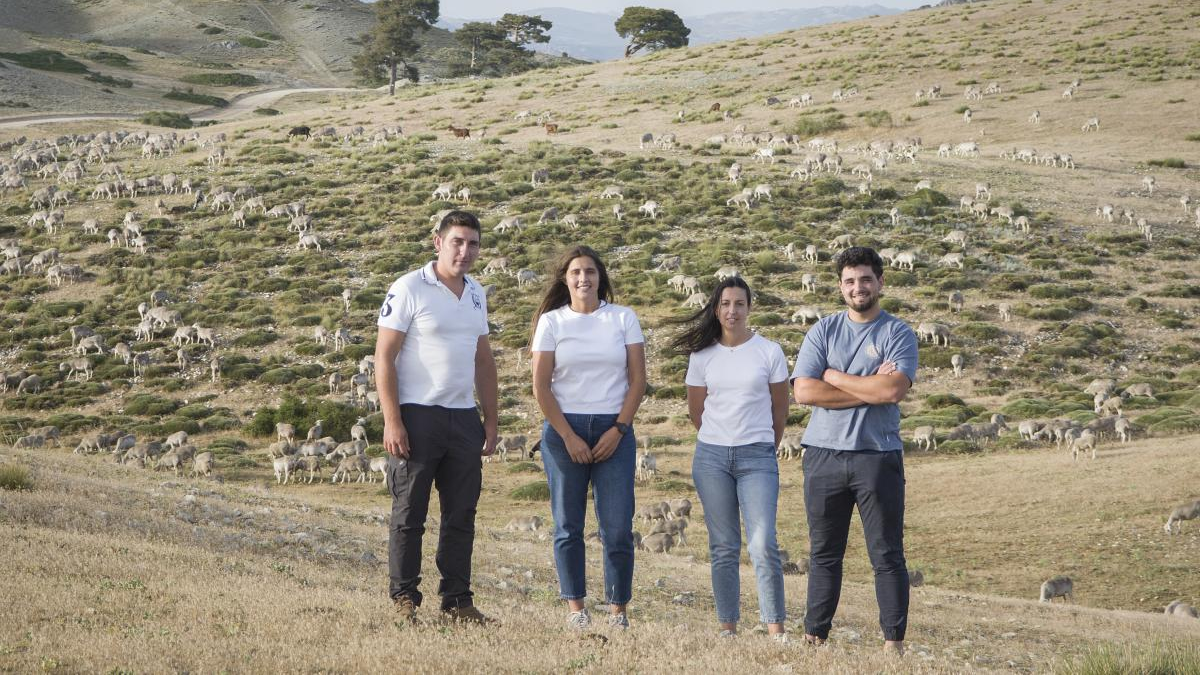
Journalists toured the communal pastures of Santiago-Pontones, where more than 70 young farmers have decided to continue the family legacy, demonstrating that extensive livestock farming can offer future opportunities in rural areas.
INTEROVIC, the Interprofessional Agri-food Organization for Sheep and Goats, has organized a press trip to the Sierra de Segura, in Jaén, so that a group of journalists could learn firsthand about the reality of extensive livestock farming and transhumance, a thousand-year-old practice recognized as Intangible Cultural Heritage of Humanity and an example of sustainable production, conservation of the territory and rural development.
The visit, framed within the International Year of Pastures and Shepherds , declared by the United Nations, has allowed attendees to tour the largest plateau in Europe, the Hernán Perea Fields, and discover one of the best examples of communal pasture use in our country.
During the trip, the journalists visited Santiago-Pontones, a municipality that has become one of the leading national centers for extensive livestock farming and transhumance. There, they spent several days with the shepherds themselves, learning about their way of life, assisting them in managing the livestock, and understanding the economic, environmental, and social importance of this activity for the survival of the villages.
A model that demonstrates that generational change is possible
In contrast to the lack of new farmers affecting much of Spain’s agricultural sector, Santiago-Pontones represents a success story. In recent years, nearly 80 young farmers have joined the industry, many after completing university studies or developing their professional careers outside their hometown. Today, they have decided to return to take over the family farms and continue a profession that combines tradition, innovation, and a commitment to the land.
For six months of the year, the flocks remain in the pastures of the Sierra de Segura and Cazorla. With the arrival of winter, they begin their transhumance towards Sierra Morena, traversing on foot the historic drove roads that have connected both territories for centuries. This seasonal movement guarantees the sustainable use of natural resources and keeps alive one of the most valuable livestock landscapes in Europe.
Shepherds: managers of high environmental value territory
Throughout the journey, the journalists were able to see that shepherds are much more than food producers. They are true stewards of the land, responsible for conserving ecosystems of high environmental value thanks to extensive grazing.
The passage of sheep contributes to the maintenance of pastures, promotes biodiversity, helps disperse seeds, and naturally reduces the vegetation load that fuels forest fires. It is no coincidence that many areas where transhumance is still practiced have a lower risk of large fires thanks to the “brush-clearing” effect of the livestock.
Furthermore, these pastures act as important carbon sinks, capturing CO₂ and contributing to the fight against climate change, an environmental benefit directly linked to the presence of extensive livestock farming.
As María del Carmen García Moreno, a veterinarian, photographer, and one of the leading experts on transhumance, recalled during the visit, “shepherds are stewards of the natural environment. Maintaining extensive livestock farming means conserving our landscapes, protecting native breeds, and guaranteeing the future of our villages.”
Consuming lamb is supporting local producers.
With this initiative, INTEROVIC aims to bring to the media a reality that often remains far removed from the cities, and that is that behind each piece of lamb meat there is a production model based on sustainability, animal welfare, the stabilization of population in the rural environment and the conservation of natural heritage.
Consuming lamb not only helps maintain thousands of family farms throughout Spain, but also makes it possible for an essential activity to continue in order to conserve our landscapes, preserve biodiversity and keep alive many rural areas that would hardly have another economic alternative.
“We want journalists to meet directly with those who make this production model possible and understand that every purchasing decision has a real impact on the future of our villages, our shepherds and our ecosystems,” says Tomás Rodriguez, director of INTEROVIC.