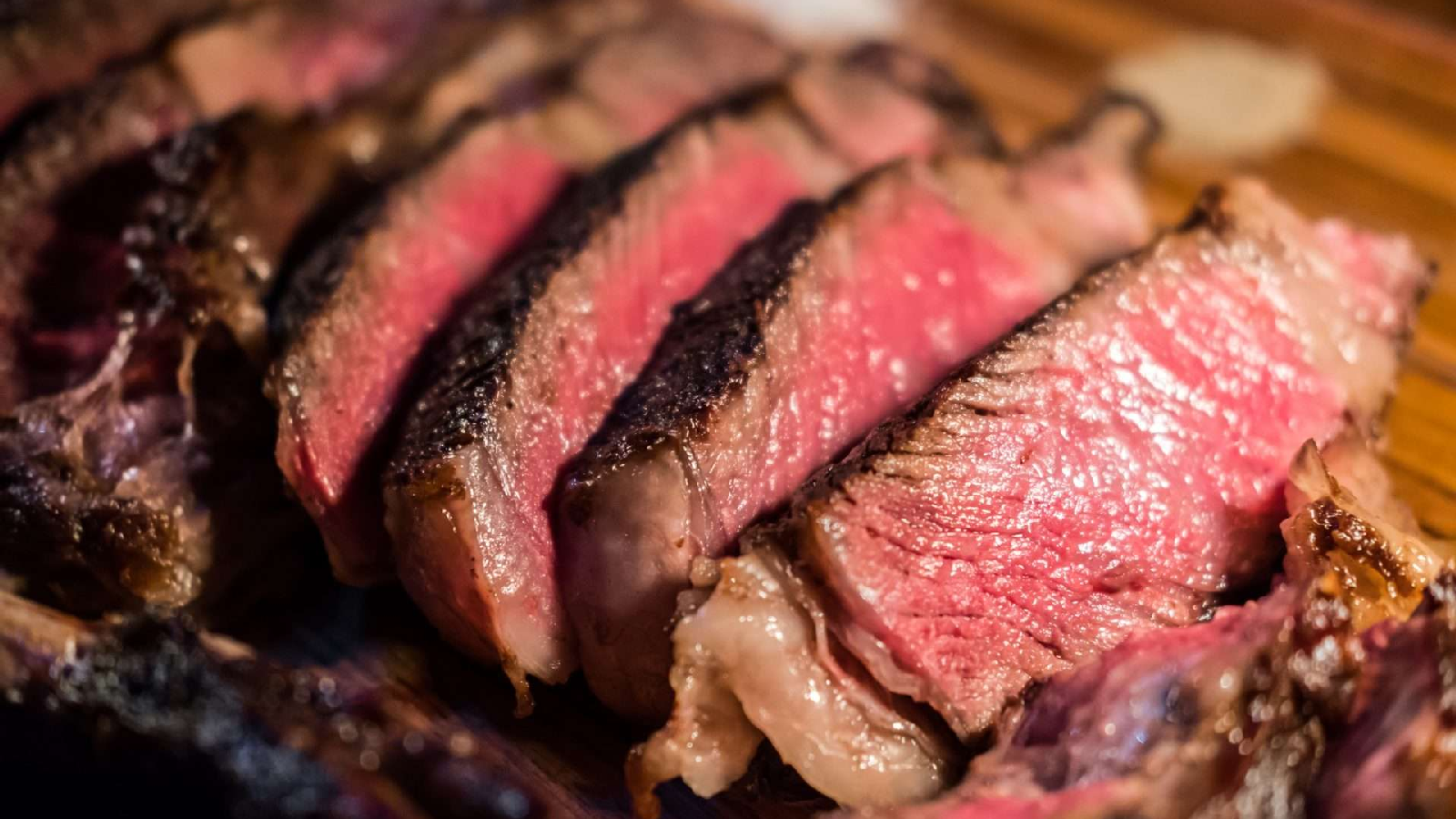
INAC is preparing a strategy to differentiate Uruguayan products and position them among consumers of certified meats.
The National Meat Institute ( INAC ) has begun to outline a strategy to strengthen the positioning of Uruguayan meat in the United States , a market that in 2025 was the main destination for the national product in terms of value and that now faces a scenario of greater competition due to the entry of Brazilian volumes displaced from China.
Meat entering the US market outside of quotas will have to compete with lower-value Brazilian products, a situation that forces companies to seek out segments where the differentiating attributes of Uruguayan production allow them to maintain better prices.
“We cannot remain positioned in the same meat segment that competes with lower-value Brazilian beef, which is trimming,” stated Fernando Gómez, representative of the Rural Federation ( FR ) on the INAC Board.
The strategy aims to separate domestic meat from products that compete primarily on price and to reinforce attributes linked to the production system.
The goal, as explained by the representative of the trade association, is to generate a differentiation capable of protecting the value received by Uruguayan exporters and producers.
Gómez considered that the competitive pressure in the United States could be partially offset by the opportunities opening up in China, where Uruguay and Argentine would face less competition from Brazil.
“As a producer, I can tell you that if this scenario continues, I would be satisfied. While the influx of more Brazilian beef into the United States might make business more difficult, since we would be practically alone with Argentine in the Chinese market, prices could offset each other. We already achieved a very good price per ton exported in 2022,” he stated.
However, the country has not yet made any progress in securing its own quota in the US market. When asked about this possibility, Gómez stated, “We haven’t made any progress. I know there was a request from the Ministry of Foreign Affairs , but nothing came of it.”
In the European market, which Brazil will lose access to in September, the strategy also focuses on highlighting the unique characteristics of the national product. “We continue to emphasize that our meat comes from farms that have not been deforested,” stated the INAC board member.
The United States leads in purchases and pays the highest prices for Uruguayan beef.
During 2025, the United States accounted for 31% of Uruguay’s meat exports, while in 2026 it remained the main destination and paid up to twice as much per ton as China, the second largest buyer.
So far this year, beef exports totaled 108,566 metric tons carcass weight, generating $593.2 million in revenue and an average export price of $5,464 per metric ton. Although volume fell 6.2% year-on-year, the average price increased 16%.
Meanwhile, the USMCA bloc —comprising the United States, Mexico, and Canada —led the way with 46,722 tons, of which the United States accounted for 43,362 tons, despite a 1.4% decrease. China came in second with 35,503 tons and a 5.7% drop, while the European Union ( EU ) received 10,666 tons, a 19.5% decline.