Production data and parameter settings are a major, yet often untapped, source of leverage in the food industry. They determine how efficiently systems run, how quickly deviations can be addressed, and whether potential for optimization can be realized. The collection, analysis and use of production data offer enormous potential for food producers. But in many companies, this data remains fragmented, difficult to access, or unused altogether. With the Weber Digital
Factory Solutions, Weber is pursuing a consistently comprehensive approach: The goal is to not just collect data but process it and make it available to create real added value in day-to-day production. To achieve this, Weber bundles all digital products and services in a scalable ecosystem that grows along with the requirements of modern production environments. This digital solution portfolio was specifically developed and consistently adapted to the needs of users to be presented at the interpack. The focus is on even greater user-centricity, intuitive operating concepts, and relevant information content—so that employees can make the right decisions quickly and at any time during their daily production work. The foundation is the Weber FactoryCockpit, a central data platform that consolidates all information and enables the integration of additional specialized products such as VideoAssist and Durablade®Care for comprehensive digitalization. In addition, the Weber Portal provides customers with a quick and user-friendly introduction to the world of Weber through a wide range of information and services. All Weber machines come equipped with the necessary connectivity for the Digital Factory Solutions as standard.
Weber Portal: Welcome to your digital Weber world
Quick access, complete transparency, and maximum user-friendliness: The Weber Portal serves as the central gateway to the digital Weber world and makes all relevant information and services available around the clock. Customers get a complete overview of their machines and lines. In addition to equipment information, a catalog of all matching spare parts, wear parts, and slicer blades can be displayed. Important documents such as operating manuals, certificates, and invoices are also accessible at any time, which is a significant advantage, particularly during on-site audits. Thanks to seamless single sign-on integration, the portal also serves as a gateway to other platforms, such as the Weber Academy with its training and e-learning programs. Another useful feature of the Weber Portal is the Dashboard, which—in conjunction with the FactoryCockpit —clearly displays live production data. Users can see at a glance if they need to intervene and, if necessary, switch directly to detailed analyses.
New functions and user-centered design make FactoryCockpit even more valuable
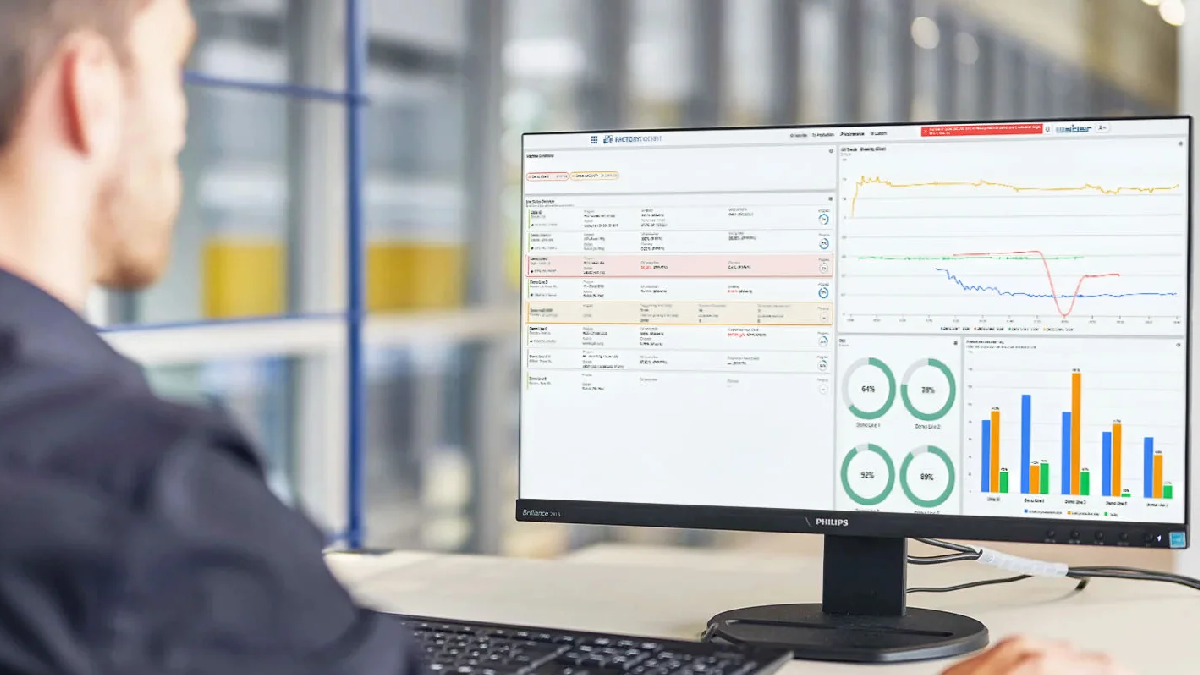
Maximum transparency, fast response times, and well-informed decisions in real time: The Weber FactoryCockpit gives food producers a central data-driven view of their entire production process. For interpack, the FactoryCockpit was specifically enhanced and expanded with new functions that make day-to-day operations even more efficient and user-friendly. One highlight is the new Program Management. For the first time, production programs for individual line components can be displayed centrally in the FactoryCockpit, parameter changes can be tracked, and programs can be compared with one another. For users, this means maximum transparency regarding process settings, faster root cause analysis in the event of deviations, and significantly simplified optimization of production processes. Another new feature is the WPC Live View function. It enables direct read access to all Weber Power Control (WPC) operator terminals within the line—all simultaneously on a single interface. This lets users keep an eye on multiple components at once and react immediately to discrepancies without having to enter the production area. This saves time, speeds up error analysis, and significantly increases the ability to react during ongoing operations. Another key update is the comprehensive redesign of the user interface. The dashboard, as the heart of this digitalized production, is now freely configurable and can be customized by users to meet their specific requirements. It follows a persona-based approach and ensures that each user group receives exactly the information relevant to their role. Instead of a uniform dashboard, the interface is specifically tailored to the needs of production managers as well as maintenance and engineering teams. The new layout offers significantly enhanced analysis functions, particularly for maintenance and engineering. Component-based fault analysis makes it possible to quickly and precisely trace malfunctions back to the specific modules within the line that are causing them. In addition, the improved display of uptime and downtime at the machine and component levels ensures maximum transparency. Users can identify causes more quickly, implement measures more effectively, and reduce unplanned downtime in the long term.
All these functions are based on the continuous provision of real-time data—whether directly on the line, in the shift supervisor’s office, or during planning meetings. The live status, as well as all relevant, line-related performance and quality data, are clearly displayed at a glance in the FactoryCockpit —from give-away and yield to good production and packages per batch, right through to availability. Thanks to this real-time transparency, deviations can be detected early and targeted countermeasures initiated. The line status for the past few hours enables a quick assessment of the current production situation, while detailed evaluations of individual time periods support a thorough analysis of temporal error patterns and the identification of the causes of malfunctions. Based on this, targeted measures—such as operator training—can be derived to increase machine effectiveness in the long term. Customizable alerts for various indicators also ensure quick response times. If defined thresholds—such as those for yield—are not met, a notification is automatically sent via email or text message to the responsible parties. Deviations can be addressed immediately and production losses are minimized. Reports and statistics also allow production data to be compared with average values of all previous batches and provide the basis for production optimization and production planning. An enormous benefit of the Weber FactoryCockpit is the visualization and analysis of overall equipment effectiveness (OEE). Availability, performance, and quality are automatically tracked in real time and consolidated into a meaningful metric without the need for manual input. This allows users to assess the productivity of their systems at a glance at any time. In addition to detailed storage of all production data, this also includes a graphic visualization including a trend curve. Additionally, it is possible to specifically evaluate certain shifts or production recipes. As one of the key indicators for evaluating the productivity of a production line, a specific OEE analysis can help avoid production losses and tap into and realize unused potential.
VideoAssist: Increasing equipment availability through quick error analysis
Sometimes, it is difficult to determine the root cause of malfunctions or errors that occur during the production process. This leads to unplanned production downtime and is challenging for both customers and service technicians. With VideoAssist, Weber has developed an effective solution for these situations, which lets operators analyze the error quickly and easily and develop lasting counter measures. Several cameras are permanently and securely installed on the machines throughout the entire production line. The cameras continuously record the production process and make it available as a video stream. If a problem occurs, a video sequence is saved for a set period of one minute prior to and thirty seconds after the event occurred. This video sequence is transferred, auto-logged with the documented error in the FactoryCockpit timeline, and displayed as a video marker. This enables customers to view the respective video sequence and to better analyze scope and root cause of the incident. The video storage can also be triggered manually.
The new Live View function was unveiled for the first time at interpack: Users can now access all installed cameras directly at any time and get an up-to-date overview of production—without having to enter the production area. This saves time, reduces the need to pass through hygiene checkpoints, and enables an immediate response to any anomalies. The function also opens up new possibilities for remote service: Service technicians can provide direct support to customers, analyze problems more quickly, and develop solutions together.
Durablade®Care: Digital blade management for transparent, economical production
What is the current stock of slicer blades, on which machines are they currently installed, and what is their state of wear? Weber Durablade®Care quickly and easily answers those questions and more. Under the Durablade brand, Weber, the market leader in slicing technology, offers not only its proprietary circular and involute blades but also an intelligent, digital management system. Slicer blades are high-precision tools; as the heart of the slicer, they have a decisive influence on the portion placement and ultimately determine give-away and yield. With the help of Durablade®Care, food processing companies can optimize the way they use their blades, which are perfectly adapted to the product and application, saving cost and increasing the efficiency of their production lines. This is made possible by the bundling of all information about the blade stock, the locations where the blades are used and stored, operating data as well as information about sharpening processes. This data is consolidated, analyzed, and made comparable, resulting in a number of added advantages for food producers.
In addition to real-time information on which line or slicer a blade is located, or a history of which blades were used on which lines, Durablade®Care provides detailed information on which slicing programs were used and how many portions, slices and pounds of product a blade has sliced per clamping process. By displaying precise information on parameters such as slicing speed and slicing gap, the performance of each individual blade can be evaluated accurately with regard to any application. The daily service life of the blades as well as the total service life are also documented, allowing a transparent comparison of different blades and enabling optimized planning of use. Another valuable benefit of Durablade®Care is the detailed analysis of the sharpening processes: The entire process is visualized, including the parameters used and the material removal. This allows users to specifically optimize sharpening processes, extend the service life of the blades and reduce costs. In addition, the individual wear level can be viewed at any time, enabling procurement based on actual needs and avoiding unnecessary inventory and downtime due to missing blades.