Groundbreaking fermentation technology increases the protein content of babassu flour by 4.5 times, creating an ingredient for the plant-based market; the project was funded with R$ 2.7 million from the JBS Fund for the Amazon.
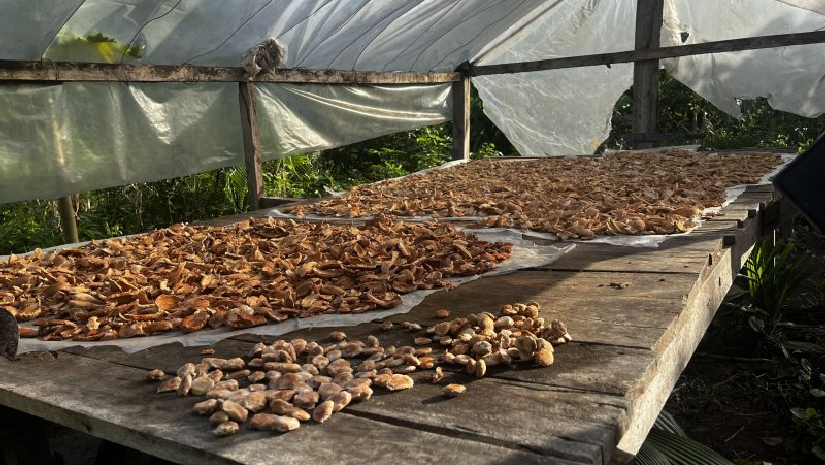
BIOINFOOD, a São Paulo-based deep tech company specializing in industrial biotechnology, has successfully transformed babassu mesocarp flour – a byproduct that previously had no industrial use – into a viable protein ingredient for the food industry. The technology, developed in partnership with the Institute of Food Technology (ITAL), more than quadruples the flour’s protein content: from 1.5% to approximately 7%. The result is an ingredient with a fibrous texture, balanced flavor, and direct potential for use in hamburgers and other plant-based products.
The results were presented in April 2026 at New Meat Brazil, the country’s leading alternative protein event, in São Paulo. The project received R$ 2.7 million in funding from the JBS Fund for the Amazon, through the GFI Brazil’s Biomes InovAmazônia Program.
“ InovAmazônia was the largest project supported by the fund in the Research and Development axis since its creation in 2020. The Amazon has opportunities that have not yet been seized, and the research we support shows that it is possible to build a different future for Amazonian communities and for the entire Brazilian food chain. The BIOINFOOD project with babassu is a concrete example of this – applied science, a national ingredient, and real impact for those who live from the forest. It is this type of result that justifies the investment ,” highlights Lucas de Oliveira Scarascia, Executive Project Manager of the JBS Fund for the Amazon.
From coconut breaker to industrial ingredient
Babassu has been exploited through extractive practices for decades, mainly in Maranhão, Piauí, Pará, and Tocantins. Around 62,000 people in 50,000 households depend on this activity, especially the coconut breakers—women who, for generations, have collected, broken, and processed the fruit manually. Despite the technical potential of the available area being 1.5 million tons per year, current production barely exceeds 4% of that total.
The main product of the chain is the oil, extracted from the almond. The mesocarp flour—what remains—is practically discarded. It is precisely this residue that BIOINFOOD has transformed into a high-value raw material. The project also had the support of the Terra do Meio Network of Alto Xingu, in Pará, which provided samples and hosted the team during visits to the communities. The network brings together 35 organizations of indigenous peoples, riverside communities, and family farmers, totaling 9 million hectares of protected land.
“ InovAmazônia has demonstrated that Brazilian biodiversity doesn’t have to remain just talk – it can be on the plate. BIOINFOOD’s project with babassu is a concrete example of how we can achieve even greater sustainability when we look at the complete utilization of native species, adding value to parts that are currently underutilized. Brazil has the potential to be a global leader in alternative proteins, and initiatives like this show the way ,” says Cristiana Ambiel, Director of Science and Technology, GFI Brazil.
How does the technology work?
The process combines yeast strain selection, enzymatic hydrolysis, and fermentation in automated bioreactors. The yeasts convert the sugars in the flour into protein biomass—without the need for new crops or deforestation. The technology has already been validated on a laboratory scale, with a prototype plant-based burger produced and evaluated. The symbolic moment of the project was the tasting of the babassu protein-based burger at the closing ceremony of InovAmazônia, with the presence of Cornelia Rodrigues, Nelinha do Babaçu, an entrepreneur from Maranhão who represents the communities of babassu nut breakers.
BIOINFOOD is now seeking commercial partners for the pilot scaling phase, with a special interest in functional ingredients industries and plant-based companies that want to diversify their portfolio with national and traceable raw materials.
“ By generating an alternative protein ingredient, our project directly contributes to reducing dependence on proteins with a higher environmental impact and enables the diversification of plant-based protein sources, aligned with sustainability and food security strategies. The technology also encourages the sustainable use of native species, without the need for deforestation or intensive cultivation, expanding the application of the babassu fruit. In terms of socio-economic impacts, the nobler destination of the babassu crop co-product promotes increased income for extractive communities and encourages the permanence of traditional populations in their territories ,” says Osmar Netto, PhD, co-founder of BIOINFOOD and leader of the project.
Market and internationalization
The global market for alternative proteins is expected to reach US$88.8 billion by 2034, growing at 14.3% annually. In Brazil, the sector generated R$1.13 billion in 2024, a 14% increase over the previous year. European and American demand for sustainably sourced, traceable ingredients with a positive socio-environmental impact creates a real window for the internationalization of the technology.
The same fermentation platform can be applied to other agro-industrial co-products – wheat bran, corn and rice, as well as husks from native oilseeds such as Brazil nuts, macauba and cupuaçu — significantly expanding the company’s potential.
“ When a deep tech company like BIOINFOOD brings a real market challenge into the laboratory, science ceases to be academic and becomes an instrument of economic transformation. Babassu is a concrete example of how the partnership between a public research institution and an innovative company can shorten the path between co-product and industrial ingredient, with scientific rigor and real scalability ,” declares Roseli Ferrari, Level VI Scientific Researcher and Technical Division Director, CCQA/ITAL.